1Seeing it as a face
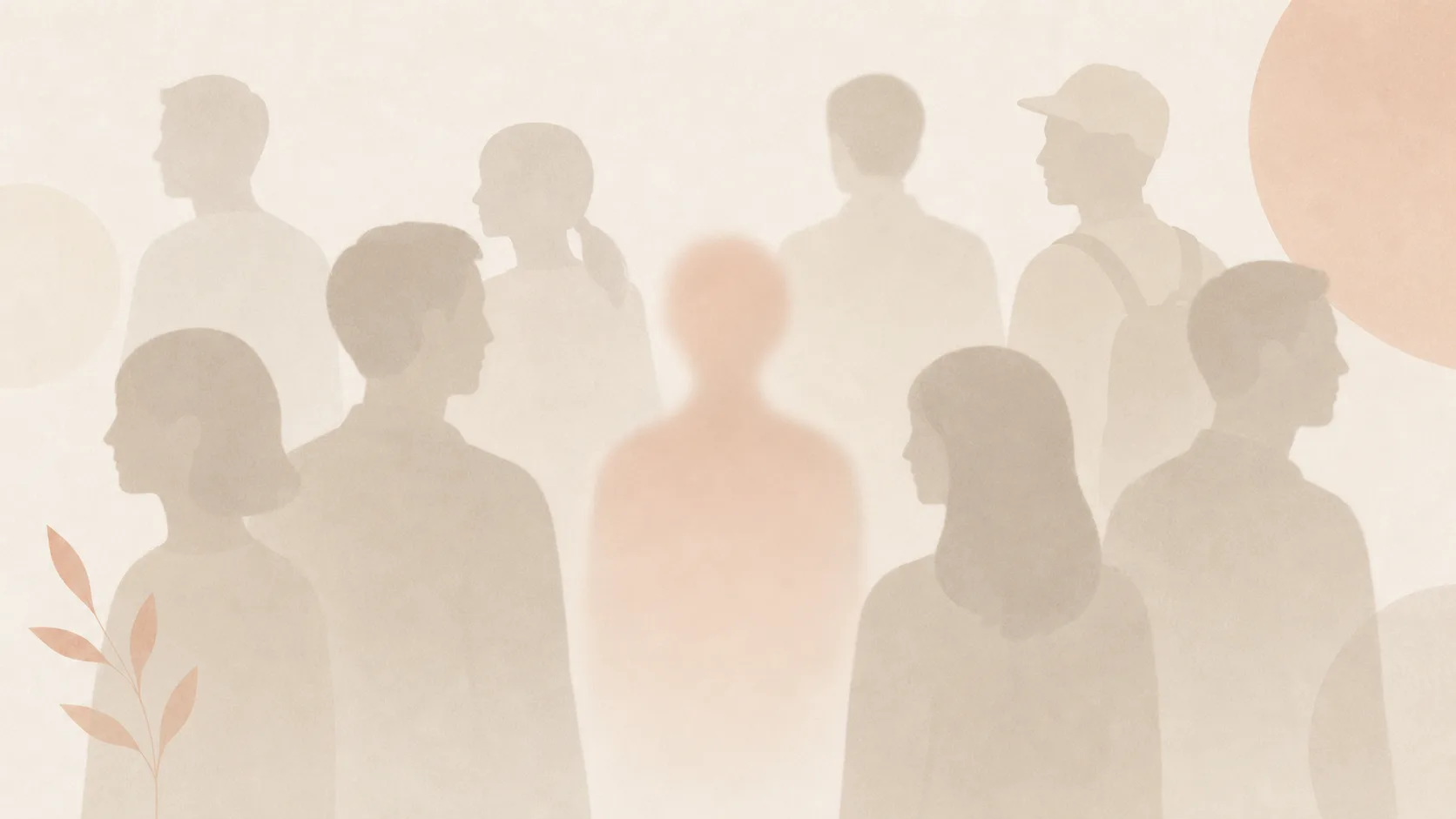
Integrating facial structure
The brain reads not just individual features like eyes, nose, and mouth, but the overall arrangement and unity of the face.
ABOUT
Understanding "I can’t remember faces" from a medical perspective.
Prosopagnosia, also known as face blindness, is a neurological and cognitive condition marked by significant difficulty recognizing or identifying people by their faces.
It can occur even when vision and intelligence are otherwise unimpaired — the difficulty is specific to processing faces. Even a face someone "should" recognize, such as a family member, friend, or celebrity, can be unidentifiable once it’s removed from context.
Many people with prosopagnosia unconsciously develop compensatory strategies — identifying people by voice, hairstyle, gait, clothing, or outline instead of their face. As a result, they have often been misunderstood for years as being "inattentive" or "not trying hard enough."
This Is Not "Forgetfulness"
The degree and nature of difficulty varies from person to person. The core issue isn’t simply forgetting a name — it’s trouble telling who someone is from their face.
Struggling to recognize even family members or close friends by face alone
Having trouble telling people apart when the setting changes, or when a hairstyle or outfit changes
Losing track of who’s who in movies or TV shows, making it hard to follow the story
Relying on cues other than the face — voice, gait, belongings, or where someone is sitting
Recognizing a face feels instantaneous, but it actually involves several layered processes. In prosopagnosia, one or more of these stages — or the connections between them — are thought not to work as expected.
The brain reads not just individual features like eyes, nose, and mouth, but the overall arrangement and unity of the face.
The face is compared against memories of previously seen faces, producing a sense of "I’ve seen this person before."
This accesses memories and relationships tied to that person — a coworker, friend, or family member.
The proper name comes out last. When only the name is hard to retrieve, a different kind of difficulty — separate from prosopagnosia — may be involved.
Acquired Prosopagnosia (AP)
A loss of previously normal face recognition ability caused by brain damage, such as a stroke or head injury.
First described by Bodamer (1947) as "Prosopagnosie."
Developmental Prosopagnosia (DP / Congenital)
A significant difficulty recognizing faces from birth or through development, without any brain damage. An online study of US adults reported about 3% under criteria including mild DP; estimates depend on the sample and assessment method.
First case report by McConachie (1976). Large-scale epidemiological studies have advanced in recent years.
The nature of the difficulty can also differ.
Research distinguishes difficulty at the stage of perceiving a face as a whole from difficulty linking a familiar face to information about that person. In practice the two don’t always split cleanly, and both elements can be present together.
Apperceptive type
Individual facial features are visible, but integrating them into a single, coherent face is difficult. Difficulty can appear even when comparing two unfamiliar faces side by side.
Associative type
The face itself can be told apart from others, but it doesn’t reliably trigger a sense of "I know this person" or access to information about them. This becomes especially difficult when the context changes.
Face recognition is supported by a group of brain regions, centered on the temporal lobe, known as the "face processing network." The fusiform face area (FFA) in particular is one of the best-known regions involved in face-specific processing.
In acquired prosopagnosia, damage or disconnection in these regions is the direct cause of impaired face recognition. In developmental prosopagnosia, there is no structural damage, but differences in the development and connectivity of these networks are thought to play a role.
What matters is that this isn’t a "memory problem" or a lack of effort — it reflects individual differences in how the brain processes information.
In recent years, researchers have increasingly focused not just on individual regions but on how the networks connecting them function. When the pathways linking facial information to memory and meaning are weak, a face can be seen clearly and still not connect to "who this is."
Facial features are read, expression and gaze are added, and the result is linked to memory and emotion.
Early processing of individual facial features
Core region for extracting and processing facial features
Processing dynamic facial information such as expression and gaze
Integrating faces with emotion and memory
Assessing prosopagnosia combines a person’s own reported difficulties in daily life with objective tests of face memory and face perception. A self-check is a starting point — a diagnosis requires evaluation by a specialist.
A 20-item self-report checklist. It’s a useful starting point for organizing the difficulties you face in daily life, but it cannot provide a diagnosis on its own.
Measures how well you can learn new faces and recognize them again despite changes in angle or lighting. One of the most widely used tests in research.
Focuses less on memory and more on how well you can perceive differences between faces. Helps assess difficulty at the stage of perceiving a face as a whole.
Involves comparing photographs of faces. Because it can sometimes be solved using cues like hairstyle or facial outline, it is typically used alongside other tests.
A self-check alone cannot provide a definitive diagnosis. If it’s significantly affecting your daily life, consider consulting a neurology department or a specialist clinic that handles higher brain function or neuropsychology, and confirm before booking that they offer face-recognition assessment.
In daily life, it can help to ask people to introduce themselves again, use name tags or seating charts, and note voices, hairstyles, belongings, or where you met someone — building up cues other than the face. It also helps not to leave this to individual effort alone; sharing these strategies at school or work matters too.
If Face Recognition Suddenly Stops Working
Developmental prosopagnosia is not "all in your head" or a personality trait — it’s studied as an individual difference in brain development and network function. In recent years, research has also begun to uncover genetic factors involved in face recognition.
In developmental prosopagnosia, similar difficulties are sometimes seen across parents, children, and siblings, suggesting a genetic contribution.
A 2024 study reported an MCTP2 gene mutation in a family with congenital prosopagnosia. Differences were also shown in right fusiform face area responses when viewing the same face repeatedly.
Not all cases of prosopagnosia can be explained by MCTP2. Genetic testing is not currently used in routine diagnosis, and further research is needed.
Articles covering symptoms, diagnosis, how it differs from developmental disorders, supporting children, and everyday coping strategies.
Questions we often hear from people with prosopagnosia and their families. This isn’t a substitute for a diagnosis, but it may help if you’ve been wondering, “Is it just me?”
Almost everyone feels a little unsure about remembering faces sometimes. With prosopagnosia, though, it’s not an occasional lapse — it’s an ongoing pattern: struggling to identify someone by face alone even after meeting many times, suddenly not recognizing someone in a different setting, and constant tension about seeming rude. It’s not a lack of effort — it’s that facial information doesn’t get processed the way it typically does.
Prosopagnosia is not a general decline in memory. People with it often remember conversations, plans, places, and events perfectly well — it’s specifically that the face is hard to use as a cue for identifying someone. Because of this, many rely on a combination of other cues instead — voice, hairstyle, clothing, gait, or the context where they meet someone.
There is currently no medication or standard treatment that directly "cures" prosopagnosia. That said, getting a diagnosis or talking with a specialist can make it easier to understand why you struggle the way you do. It can also make it easier to explain your situation to others and to adopt supports like name tags, notes, verbal introductions, seating charts, and photo references.
Developmental prosopagnosia can run in families, and genetic factors are suspected to play a role. If a child struggles to recognize friends’ faces or tell teachers apart, environmental adjustments — rather than scolding — can help: having people say their names, using seats or belongings as cues, or reviewing photos with names in advance. Consult a specialist or a developmental support service if needed.
Rather than expecting the individual to simply try harder, small changes to the surrounding environment can make a real difference — introducing yourself by name even if you’ve met before, using name tags or seating charts, keeping fixed seating in meetings or classes, and preparing a reference list that pairs photos with names. What matters most is sharing the understanding that it’s not "not remembering" — it’s that a face alone is hard to identify by.
Bodamer, J. (1947). Die Prosop-Agnosie. Archiv für Psychiatrie und Nervenkrankheiten.
McConachie, H. R. (1976). Developmental prosopagnosia. Cortex.
Bruce, V., & Young, A. (1986). Understanding face recognition. British Journal of Psychology.
Duchaine, B., & Nakayama, K. (2006). The Cambridge Face Memory Test. Neuropsychologia.
Sun, Y., et al. (2024). Human genetics of face recognition. Genetics.
DeGutis, J., et al. (2023). What is the prevalence of developmental prosopagnosia? An empirical assessment of different diagnostic cutoffs. Cortex, 161, 51–64. DOI: 10.1016/j.cortex.2022.12.014.
Rossion, B. (2013). The composite face illusion. Visual Cognition.
A self-check based on the PI20, available in Japanese. Takes about 3 minutes.
Take the self-check